
Guestroom Design / Guide 06
Hospitality Interior Design Dubai: Bathroom Privacy and Shared Use
Review privacy in Dubai hotel bathrooms with clear sightlines, workable doors, usable dressing space and layouts that support two guests at once.
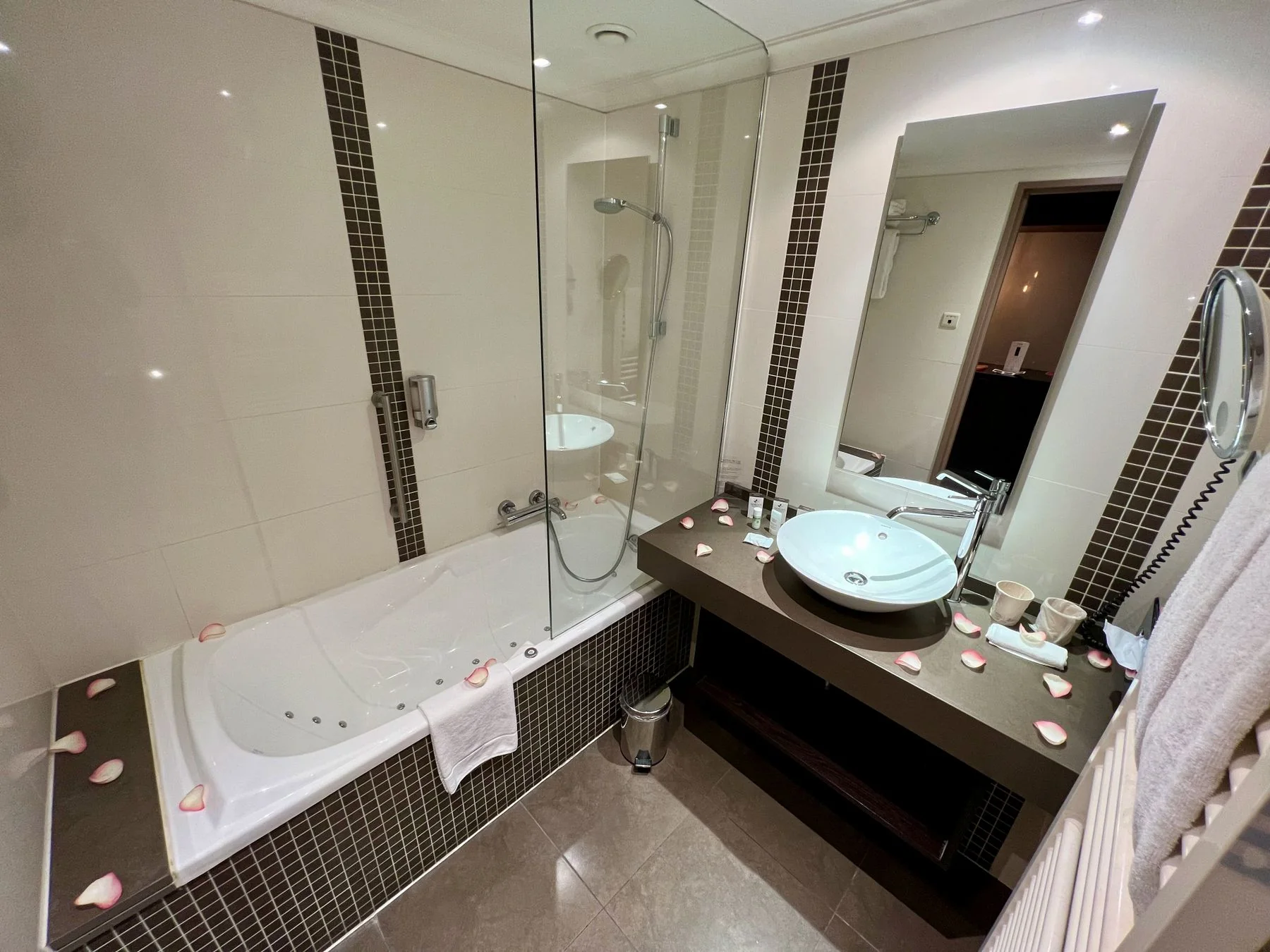
At a glance
Bathroom privacy should be tested from every normal position in the guestroom. Coordinate doors, glazing, screens and lighting with the bathing and dressing sequence. Give guests an understandable way to control visibility, and consider how one person can use the bathroom while another rests or prepares to go out.
An open bathroom may make a room appear spacious, but guests do not all share the same privacy preferences. Couples, colleagues and family members can use the same room category. Hospitality interior design in Dubai should make privacy a deliberate part of the experience rather than expecting every visitor to adapt to a single visual concept.
Review the views into the bathroom
Check what is visible from the room entrance, bed, desk and seating. Include the position of mirrors, which can reveal a view that the plan does not immediately suggest. Review both daytime and evening conditions because glazing and screens can behave differently as light levels change.
Decide which activities require separation and how that separation is achieved. A frosted panel may obscure detail while still showing silhouettes. Judge the actual sample and lighting arrangement rather than relying on the privacy implied by a material name or a rendering.
Make privacy controls obvious
If a blind, curtain or movable screen provides privacy, guests should recognise and operate it easily. Keep the control reachable and explain any unusual behaviour simply. A privacy feature is less useful if it requires a call to reception or can only be operated from an inconvenient position.
Coordinate motorised or switchable systems with the technical team, including maintenance access and the expected behaviour during faults or loss of power. Review cleaning and replacement at the same time. The visual concept should remain practical throughout the room's operating life.
Support simultaneous use
Map a realistic morning routine for two people. One may be showering while another needs the mirror, wardrobe or a dry surface for clothing. Separating selected activities can improve usability, but only if the resulting circulation and privacy remain coherent.
Avoid a vanity arrangement that becomes the only passage to the toilet or shower when occupied. Test doors, drawers and personal items together. Provide space for both the hotel's amenities and the guest's own toiletries so that clean surfaces are not immediately overwhelmed by everyday use.
Consider sound and night-time light
Visual privacy does not automatically provide acoustic separation. Review door systems, partitions and connected services with the relevant specialists according to the room brief. A lightweight sliding screen may be suitable for concealing a view while offering little control of sound.
Check how bathroom light reaches the bed at night. Glazing, door gaps and mirrors can direct brightness towards a resting guest. Coordinate a useful night-time setting and an understandable control sequence without compromising the illumination needed for movement or required safety systems.
Test privacy with real users and staff
A full-size mock-up allows the team to try the sequence rather than debate it only through drawings. Use actual towels, clothing and personal products. Ask reviewers with different expectations to identify where the arrangement feels unclear or exposed.
Invite housekeeping and maintenance staff to operate every screen and door. Check tracks, folds, handles and the space needed for cleaning. Record the approved details and any limitations so that later substitutions do not change the privacy behaviour after the overall layout has been accepted.
Common questions
Is frosted glass enough to provide bathroom privacy?
It depends on the glass, lighting and arrangement. Test the real material from relevant positions; obscured detail does not necessarily mean that silhouettes or activity cannot be seen.
Can an open bathroom work in a twin room?
It may, but the privacy needs of unrelated guests deserve particular attention. Provide an effective, intuitive way to separate activities and test the complete room rather than relying on appearance alone.