
Guestroom Design / Guide 03
Hospitality Interior Design Dubai: Late-Arrival Guestroom Comfort
Design Dubai hotel guestrooms for easy late arrivals with intuitive lighting, practical bag storage, discreet bathroom access and clear controls.
At a glance
A late-arrival room should be understandable without a demonstration. Provide a clear first lighting setting, an obvious place for bags and simple access to the bathroom and bed. Review sound, glare and controls so one guest can settle in without unnecessarily disturbing a companion.
After a long journey, small uncertainties become more noticeable. A guest may struggle to find a light, open luggage across the floor or wake a companion while locating the bathroom. Hospitality interior design in Dubai can make this first encounter easier by planning the room around a tired visitor who has never used its systems before.
Make the entrance setting useful
Identify what should be visible when the door opens: the main route, a bag surface and the first controls. Coordinate the arrival lighting with the operator and electrical team. A welcoming glow is useful only if it also lets the guest understand the room safely and comfortably.
Check the door swing against wardrobes and loose furniture. Allow a guest to enter with a case before needing to move another object. Where the layout permits, keep the immediate view from the corridor discreet so the bedroom does not feel exposed during a late arrival.
Provide a place to pause and unpack
Place a convenient surface for a phone, key card and small personal items near the arrival sequence. Give luggage a location where a case can be opened without occupying the path to the bathroom. Test the arrangement with the type and number of bags expected for the room category.
Avoid forcing guests to unpack immediately in order to use the room. Someone arriving late may want only a few essentials before sleeping. Clear storage, visible handles and a practical luggage position support that choice without requiring a full search of the joinery.
Support different sleeping routines
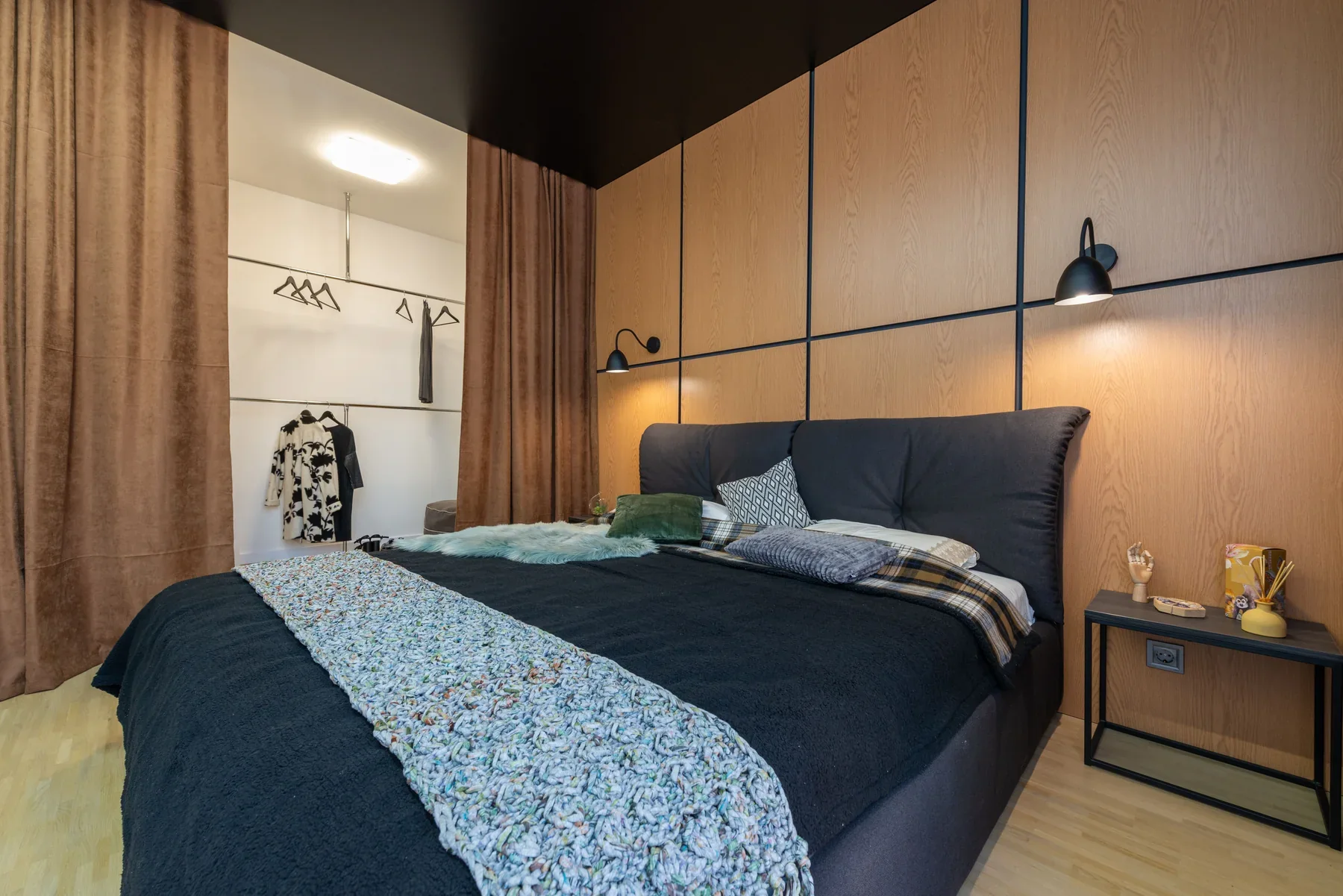
Review how one guest can read, charge a device or visit the bathroom while another rests. Separate bedside controls and appropriately directed light can help, but they need to be tested with the actual bed and fittings. Check what the second guest sees from the pillow position.
Consider routine sounds from doors, drawers and equipment. Select and coordinate suitable hardware, installation details and building services with the relevant specialists. Soft-looking finishes alone cannot resolve a noisy door closer or an intrusive mechanical sound near the bed.
Make blackout and temperature control understandable
Curtains and blinds should be easy to identify and operate. Review light at the edges and around the headboard in a furnished mock-up, including indicator lights on equipment. Decide which small lights are necessary for orientation and which can be controlled without compromising required systems.
Agree a clear temperature-control interface with the mechanical and controls teams. Avoid hiding essential settings behind decorative panels or complex menus. Provide concise instructions only where they add value; the primary functions should be apparent from the room itself.
Test an unfamiliar guest's first minutes
Ask someone who has not been briefed to enter the mock-up with bags and settle in. Observe where they hesitate rather than explaining the design as they move. Repeat the trial with a companion already in bed and with the room set for night-time use.
- Find the arrival light and a surface for personal items.
- Open luggage without blocking the bathroom route.
- Operate bedside and blackout controls without coaching.
- Check the room from the position of the resting guest.
Common questions
Should arrival lighting switch on every light?
Not necessarily. A coordinated arrival scene can make the route and main functions visible without creating unnecessary brightness. Confirm its behaviour and overrides with the operator and technical team.
Are detailed control instructions a sign of good service?
Instructions can help with less familiar features, but basic functions should be intuitive. Use mock-up feedback to simplify confusing controls before relying on longer written explanations.