
Arrival & Shared Spaces / Guide 02
Hospitality Interior Design Dubai: Concierge and Luggage Storage
Coordinate concierge service and luggage storage in Dubai hotels with clear guest handovers, discreet holding areas and practical trolley routes.
At a glance
Concierge and luggage planning connects a visible service point with secure, organised support space. Define the handover, holding and retrieval sequence, then test the route using actual bags and trolleys. Keep stored items out of circulation while making assistance easy for guests to find.
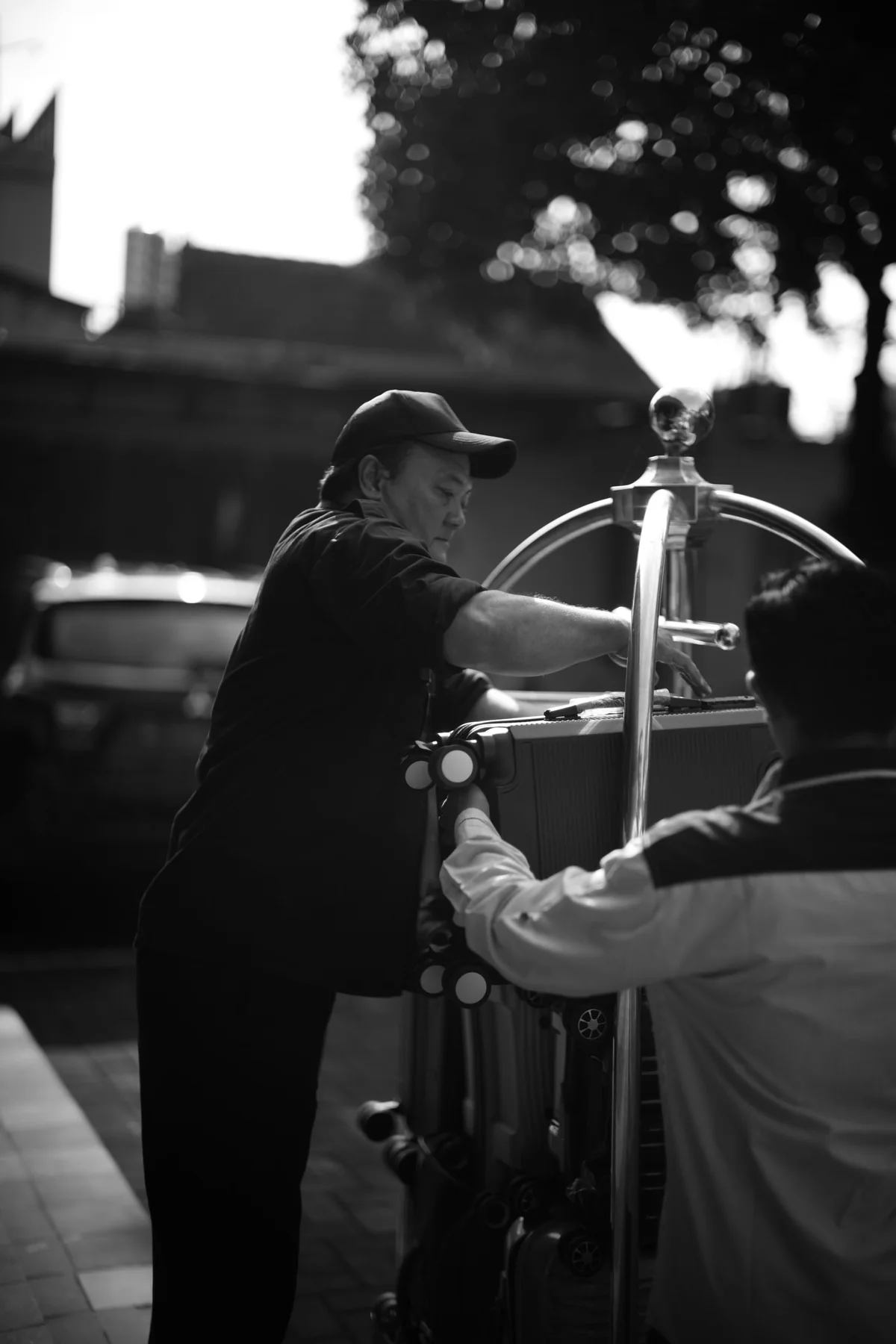
Luggage remains part of the hotel experience before check-in and after checkout. Without a clear arrangement, bags can occupy reception corners and staff may need to interrupt other tasks to retrieve them. Hospitality interior design in Dubai should consider concierge service as a complete sequence that links the guest-facing desk, storage and movement through the property.
Understand the demand for temporary storage
Ask the operator when bags are most likely to accumulate and how long they remain. Group arrivals, early check-ins and late departures create different patterns. Use available operating information to establish a realistic brief instead of sizing the store from a single quiet-day observation.
Include a range of items: small cases, larger luggage, pushchairs and occasional equipment that the hotel agrees to hold. Decide what the service accepts and where exceptional items are managed. The storage layout should support that policy rather than leaving staff to find space wherever it happens to be available.
Make the guest handover straightforward
Locate the concierge or assistance point where arriving guests can identify it without joining the reception queue unnecessarily. Provide a temporary place for bags during the handover, with enough room for the guest and a companion to remain together.
Coordinate the operator's identification and retrieval procedures with the physical arrangement. A clear surface, appropriate storage for tags and discreet access to booking information can help staff work consistently. Avoid placing personal details or luggage labels where unrelated visitors can easily read them.
Organise the store for retrieval
Arrange the store so that staff can identify and retrieve an item without moving every bag in front of it. Consider shelf positions, larger-item areas and internal routes as part of the same system. Confirm loading and stability requirements with the appropriate suppliers and specialists.
Separate stored guest items from cleaning supplies, spare furniture and general deliveries. Shared storage may appear efficient on a plan but can make accountability and retrieval harder. If several functions must share a room, establish clear zones and access responsibilities with the operator.
Test trolley movement through the building
Use the actual trolley dimensions to check doors, turns, lifts and changes in level. Review the route from the entrance to storage and onwards to guestrooms. The shortest path is not necessarily the most practical if it repeatedly crosses occupied seating or a restaurant queue.
Provide a location for empty trolleys when they are not in use. They should not become permanent objects in an escape route or in front of wayfinding. Coordinate required clearances and safety provisions with the responsible team rather than using spare-looking corridor space by default.
Detail for contact and routine upkeep
Luggage handling creates repeated contact with walls, corners and door frames. Select suitable finishes and protective details where that contact is likely. Make protection part of the design so it does not appear as an improvised repair after opening.
Invite concierge, security, housekeeping and maintenance representatives to review the arrangement. Walk through accepting, storing and returning several bags while other guests pass by. Record who controls access, how the store is kept organised and how the guest-facing area is reset after a busy arrival.
Common questions
Can luggage be held behind the reception desk?
A small temporary provision may be useful, but it should not replace a properly assessed storage arrangement. Review security, staff movement, equipment access and the likely volume of bags.
Should the luggage store be visible from the lobby?
Guests need to find assistance, not necessarily see the stored items. A discreet store can work well when the handover point is clear and the staff route is convenient.