
Dining & Social Spaces / Guide 08
Hospitality Interior Design Dubai: Rooftop Lounge Seating and Service
Plan a Dubai rooftop lounge with comfortable seating groups, useful views, coordinated service routes and a realistic approach to changing conditions.
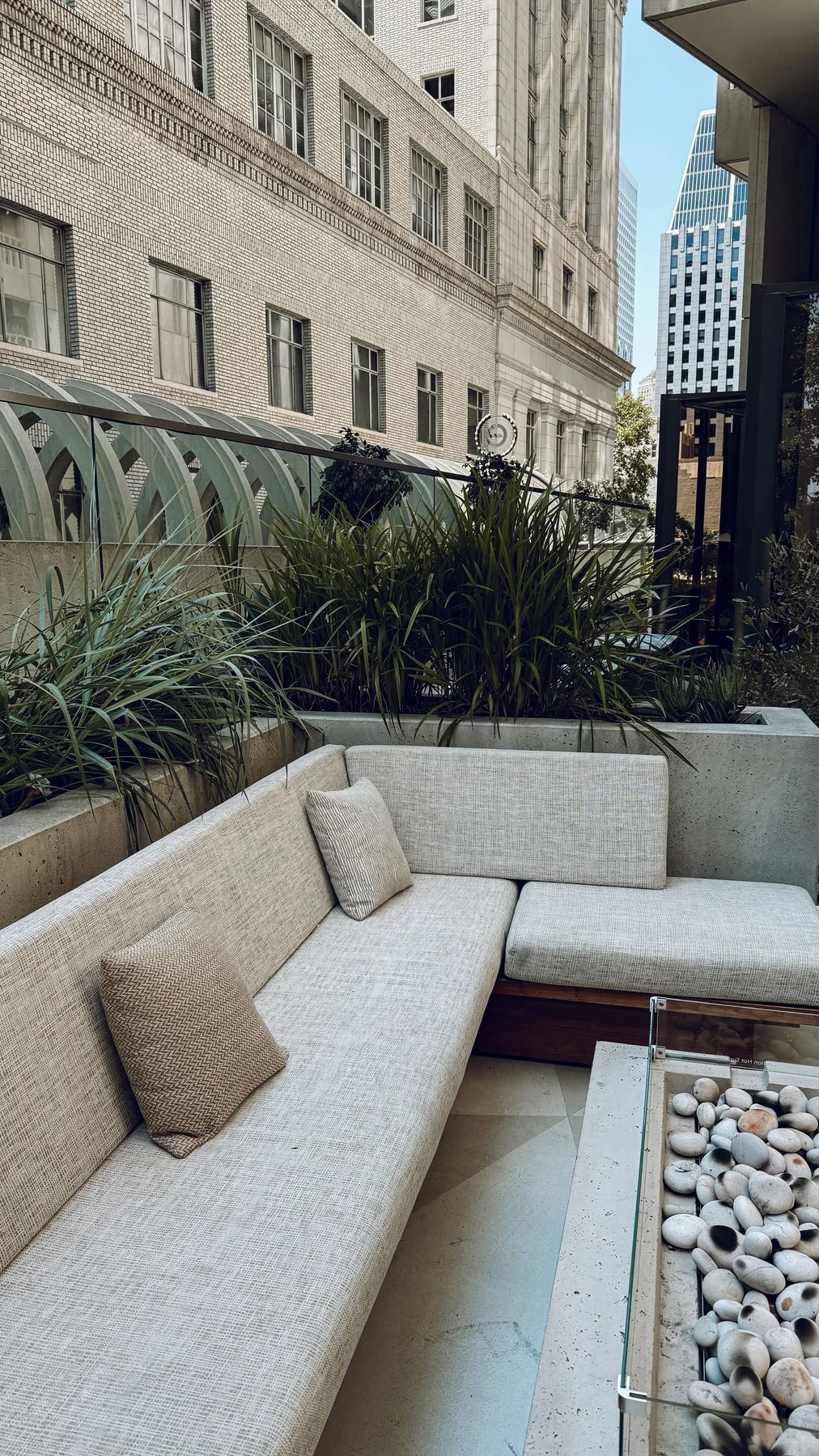
At a glance
Rooftop lounge planning must connect the view with comfort and operations. Study exposure, access and the intended service periods, then arrange seating and support areas accordingly. Coordinate structural, safety, environmental and technical requirements with qualified specialists before furniture and shading are finalised.
A skyline view gives a rooftop venue a strong starting point, but guests experience more than the outlook. They also notice wind, glare, seat comfort and how easily a drink arrives. Hospitality interior design in Dubai should turn the rooftop into a workable venue that remains coherent when conditions or service patterns change.
Study the actual rooftop conditions
Establish orientation, exposure, surrounding buildings and the relationship to indoor facilities. Agree the seasons and times of day the operator intends to use the space. A lounge planned mainly for evening visits should not be judged only through a bright daytime render.
Have the relevant specialists assess structural loading, wind conditions, drainage and required safety provisions. Do not assume that equipment suitable for a ground-level terrace is automatically appropriate on a roof. Record the conditions under which furniture or movable elements need to be secured, stored or taken out of use.
Offer a range of seating experiences
Combine sociable groups with smaller settings rather than turning every seat towards the edge. Some guests want the view; others prefer an easier conversation or a more sheltered position. Review comfort from the actual seated height and check what furniture, planting and barriers conceal.
Give each useful seat a suitable surface for drinks or food. Very low tables may work for a relaxed pause but be awkward for a fuller menu. Match the furniture to the service proposition and test how guests get in and out when neighbouring seats are occupied.
Plan the service route from arrival to clearing
Map the journey from lifts or stairs to the host point and seating. Include staff carrying trays, replenishing supplies and clearing used items. Locate service support where it is useful without making equipment the principal view on arrival.
Check the connection to kitchens, bars and washrooms with the operations team. A rooftop may depend on facilities elsewhere in the building, making lift access and holding space important. Coordinate the service model before committing to a seating capacity that the supporting operation cannot comfortably manage.
Coordinate shade, light and material contact
Review shade during the intended daytime service periods and glare from adjacent glazing. Select furniture and finishes with appropriate supplier information for the site conditions. Test the surfaces guests touch, including chair arms and tabletops, rather than evaluating appearance alone.
For evening use, illuminate tables and routes while controlling glare towards guests and neighbours. Coordinate outdoor electrical systems and fittings with qualified specialists. Keep decorative lighting compatible with the practical needs of service, cleaning and any required emergency provisions.
Prepare a reduced operating layout
Define how the venue works when only part of the rooftop is suitable for use. Show which seats remain, how routes are protected and where unused furniture goes. A planned reduced arrangement is more welcoming than a room of scattered empty tables and stacked cushions.
Include daily inspection, cleaning and storage in the handover. Staff should know the approved setup and the conditions that require changes. Revisit the plan after opening using actual operating experience, especially where wind or guest movement differs from what the drawings suggested.
Common questions
Should every rooftop seat face the skyline?
No. A mix of outlooks and levels of shelter can support different guests and occasions. Preserve useful views while giving conversation, service and comfort equal attention.
Can ordinary outdoor umbrellas be used on a roof?
Only after the specific products and installation are assessed for the site. Wind, anchoring, structure and operating procedures require appropriate technical review; appearance alone is not a basis for selection.