
Comfort & Materials / Guide 18
Hospitality Interior Design Dubai: Artwork Placement and Guestroom Identity
Plan artwork in Dubai hotel guestrooms with suitable scale, clear sightlines, coordinated lighting, responsible sourcing and practical installation details.
At a glance
Artwork works best when its position is considered alongside furniture, lighting and the room's narrative. Select an appropriate scale, review views from the bed and entrance, and coordinate installation and maintenance. Record provenance and permissions, and distinguish artwork from decorative objects without inventing a cultural or project story.
One well-placed work can give a guestroom more identity than several unrelated decorative pieces. Its effect depends on the setting as much as the image itself. Hospitality interior design in Dubai should connect artwork selection to the room's proportions and character, allowing guests to encounter it naturally without overwhelming a space intended for rest.
Define the role of the work
Decide whether the artwork establishes a focal point, introduces colour, supports a local narrative or gives variation to repeated room types. A clear role helps the team compare options without relying only on personal taste.
Keep the narrative honest. A work can be contemporary or simply chosen for its visual qualities without being described as a local cultural reference. Where the project does make such a connection, research it and involve appropriate contributors. Record what is known about the artist and the work rather than filling gaps with a decorative story.
Test scale in the furnished room
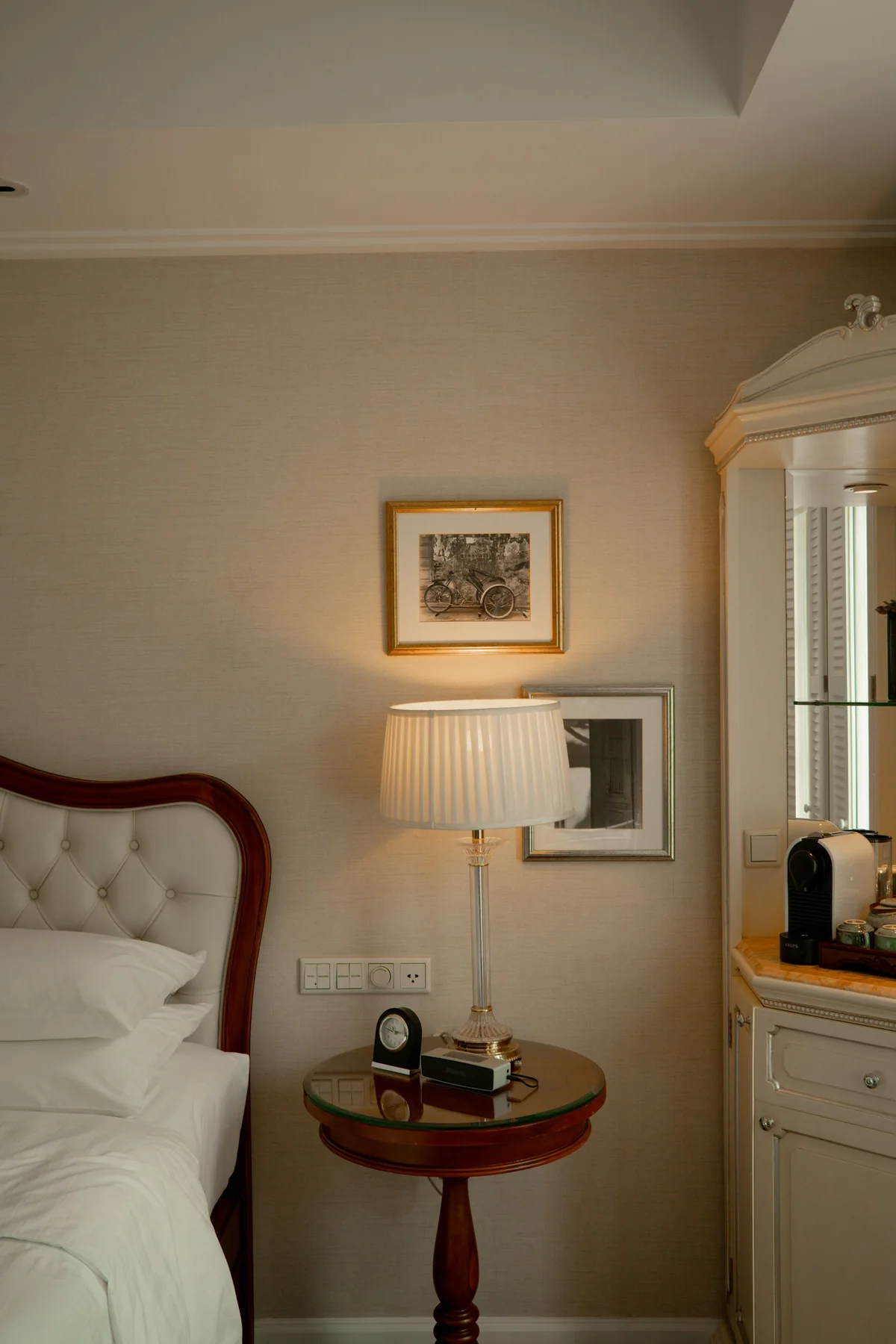
Review artwork alongside the headboard, bedside lamps, television and doors. An isolated elevation can make a piece appear balanced while the finished room gives it little breathing space. Use full-size paper outlines or a temporary mock-up to judge the relationship before ordering.
Consider the view from the entrance and from the bed. A small work may suit a close viewing position but disappear on a large wall. Equally, a forceful composition directly opposite the pillow may not support the intended atmosphere. Let the room's use guide the choice as well as the available wall area.
Coordinate light and reflective surfaces
Check daylight, decorative lighting and any dedicated illumination together. Glazing over a framed work can reflect windows or lamps, making the image difficult to see. Review the proposed frame and protective surface in the actual setting where possible.
Ask the supplier or artist about suitable display conditions, especially for sensitive materials. Coordinate lighting and protection with the relevant specialists. A decorative mirror or sculptural object may serve as an alternative focal element, but its reflections and installation need the same careful review as a framed work.
Resolve sourcing and installation
Clarify whether the item is an original, an edition, a licensed reproduction or a decorative production piece. Confirm the agreed use, credit and permissions with the relevant parties. Keep this information in the procurement record so later room photography or replacement requests can be handled appropriately.
Coordinate fixings, wall construction and installation with qualified suppliers and the project team. Consider the item's weight, guest contact and maintenance access. Avoid relying on a generic hanging detail for every piece, particularly where materials or dimensions vary across the collection.
Plan care and variation over time
Provide cleaning instructions and identify who may move or repair the work. Housekeeping should not have to guess how to treat an unfamiliar surface. Record the installed location with a photograph and item code so the collection remains organised.
Where guestrooms use different works, define a coherent selection strategy. Variation can add interest without making room categories feel inconsistent. Keep approved alternatives or a replacement approach for damaged or unavailable pieces, preserving the room's overall intent rather than buying the nearest visual substitute at short notice.
Common questions
Must hotel artwork depict the destination?
No. It can express character through colour, material, form or a contemporary commission. Any claimed connection to Dubai or a cultural tradition should be supported by research and appropriate attribution.
Should artwork always sit above the bed?
No. Compare views from the bed, entrance and seating area, along with lighting and installation requirements. The best position is the one that supports the room's composition and practical use.